Pet Peeve - Someone gets a bird and then complains it doesn't talk.
DON'T GET A BIRD JUST BECAUSE YOU WANT A PET THAT TALKS!! GET A FRIEND!! GET A LIFE!!
Talking is a BONUS!! Even if it's a species known for excellent talking skills such as an African Grey, there's NO guarantee it will ever learn to talk in human! I had a friend with an African Grey. In 40+ years it NEVER spoke a single word.
You don't REALLY "love birds", if you want to get rid of it simply because it doesn't speak.
Showing posts with label screaming. Show all posts
Showing posts with label screaming. Show all posts
Friday, October 18, 2013


Thursday, February 16, 2012
Staring at Birds - Thrifty Fun 2
Yesterday's thrift store haul for $2:


Remember - you don't need to go broke to keep your birds entertained and swimming in new toys!
Wednesday, May 18, 2011
Bird Tip - More Independence
Yeah - I'm big on the a lot of out-of-cage time to avoid/eliminate behavior problems. Unfortunately, a lot of people take that to mean the bird needs to be glued to your body which makes problems worse.
Ducky's cage is pretty much open 24/7 with a play stand in front. We do regularly lock him in and do stuff around him when his door's closed so he can practice not screaming while locked up and watching us go about our business. I do this with babies I raise too. They learn that just because I'm in the room they don't necessarily get out and they don't necessarily get attention at the moment. I've been on the phone with people wanting a conure and they're not convinced I have any because I don't have any noise in the background.
So, practice Independence Sessions by locking your bird in its cage several times a week while you go about your business. In order for this to be successful, your bird's needs must be met first - Exercise or have your bird out for awhile before doing any Independence Sessions. Put super duper goodies in the cage so cage time and Independence Sessions are things they look forward to.
Also practice this: Teach Independence
Ducky's cage is pretty much open 24/7 with a play stand in front. We do regularly lock him in and do stuff around him when his door's closed so he can practice not screaming while locked up and watching us go about our business. I do this with babies I raise too. They learn that just because I'm in the room they don't necessarily get out and they don't necessarily get attention at the moment. I've been on the phone with people wanting a conure and they're not convinced I have any because I don't have any noise in the background.
So, practice Independence Sessions by locking your bird in its cage several times a week while you go about your business. In order for this to be successful, your bird's needs must be met first - Exercise or have your bird out for awhile before doing any Independence Sessions. Put super duper goodies in the cage so cage time and Independence Sessions are things they look forward to.
Also practice this: Teach Independence
Monday, May 16, 2011
Bird Tip - Do NOT Fall for the Jedi Mind Tricks!
Have you seen "Finding Nemo" - The seagulls going Mine! Mine! Mine! tell the story how birds think.
Your time is Mine.
Your food is Mine.
Your attention is Mine.
Your affection is Mine.
Your house is Mine to explore and destroy.
Your money is Mine and you will spend it all on more and better toys for ME.
Your undying gratitude is Mine for allowing you to be Mine.
You have to set a time when your baby can come out and play, and a time when it cannot.
If you do not set this time line and keep to it the sweet wittel birdy will use every trick it can to get you to capitulate and surrender your body and soul to the exclusive 365/24/7 slave service. And no, you do not get the 366 day on Leap Year off either.
My thanks to Les from the Conure Community Chat for the foregoing explanation of how a bird thinks: Conure Community
So, you see, birds are self-centered, self-absorbed little creatures that will use Jedi Mind Tricks on you to get what's rightly theirs. And the Force is strong in them. Remember to resist their Jedi Mind Tricks by teaching Independence, Socializing, teaching him biting is not appropriate, keeping him off your shoulder unless invited, not stimulating him sexually, and teaching him his cage is his room.

Your time is Mine.
Your food is Mine.
Your attention is Mine.
Your affection is Mine.
Your house is Mine to explore and destroy.
Your money is Mine and you will spend it all on more and better toys for ME.
Your undying gratitude is Mine for allowing you to be Mine.
You have to set a time when your baby can come out and play, and a time when it cannot.
If you do not set this time line and keep to it the sweet wittel birdy will use every trick it can to get you to capitulate and surrender your body and soul to the exclusive 365/24/7 slave service. And no, you do not get the 366 day on Leap Year off either.
My thanks to Les from the Conure Community Chat for the foregoing explanation of how a bird thinks: Conure Community
So, you see, birds are self-centered, self-absorbed little creatures that will use Jedi Mind Tricks on you to get what's rightly theirs. And the Force is strong in them. Remember to resist their Jedi Mind Tricks by teaching Independence, Socializing, teaching him biting is not appropriate, keeping him off your shoulder unless invited, not stimulating him sexually, and teaching him his cage is his room.

Monday, January 31, 2011
Bird Tip - Teach Independence to Reduce Screaming
With a sweet new bird, your inclination is to cuddle it and have it stuck to your body when it's not in its cage. Well DON'T!
Paulie doesn't need to be held or on someone constantly. It's good for him to spend some time on top of a cage, or on a play stand by himself for a while each day. Teaches independence and so he won't learn to scream for attention. Do this "independence time" after you have spent some time cuddling and playing with him. Helps a lot to have special goodies on the cage/play stand - table foods, water, wad of paper to chew up, new toy, etc.
If he won't stay on the cage/play stand or won't stop screeching for you (give him at least 5-10 minutes to stop screeching or jumping off, keep putting him back on the cage/stand) quietly pick him up and lock him in his cage until he calms down. Leave the room if you have to. You can play with him again after he's calmed down and quiet for 15 minutes or so. He'll hear you walking around and whatever and he'll scream. Don't go to him, don't let him out, don't "poor baby" him through the bars. Just ignore him.
You also need to be realistic as to how often a bird vocalizes. Birds are not quiet animals (Then again, humans aren't either. When was the last time you went 15 minutes without opening your trap?) .
Understand when it's normal for them to be vocalizing:
- Dusk: 15-20 minutes
- Dawn: 15-20 minutes. 15-20 minutes seems absolute FOREVER if you can't stand the noise. Find some noise that really grates on your nerves and see if you can stand it before you get yourself a bird.
- When you leave the house. He should settle down w/in 10-15 minutes after you leave. Reduce screaming in this instance by giving the bird super special items right before you step out the door - favorite toy, favorite food, etc. Save certain special items for this use. Your bird will look forward to your departure in anticipation of his bonus goodies.
- Even when you leave the room it's not odd for him to beep once or twice - more persistent than that and you need to put him in his cage and/or leave the room until he quiets down.
Understand "contact calls":
- When you return home and he's screaming, he's contact calling you. When you come home, go briefly say "hi" to the bird, let him out on top of his cage, go do something like bathroom/change clothes whatever until he's quiet for a few minutes; then pick him up and play with him.
Read more about contact calls: Contact Calls
Paulie doesn't need to be held or on someone constantly. It's good for him to spend some time on top of a cage, or on a play stand by himself for a while each day. Teaches independence and so he won't learn to scream for attention. Do this "independence time" after you have spent some time cuddling and playing with him. Helps a lot to have special goodies on the cage/play stand - table foods, water, wad of paper to chew up, new toy, etc.
If he won't stay on the cage/play stand or won't stop screeching for you (give him at least 5-10 minutes to stop screeching or jumping off, keep putting him back on the cage/stand) quietly pick him up and lock him in his cage until he calms down. Leave the room if you have to. You can play with him again after he's calmed down and quiet for 15 minutes or so. He'll hear you walking around and whatever and he'll scream. Don't go to him, don't let him out, don't "poor baby" him through the bars. Just ignore him.
You also need to be realistic as to how often a bird vocalizes. Birds are not quiet animals (Then again, humans aren't either. When was the last time you went 15 minutes without opening your trap?) .
Understand when it's normal for them to be vocalizing:
- Dusk: 15-20 minutes
- Dawn: 15-20 minutes. 15-20 minutes seems absolute FOREVER if you can't stand the noise. Find some noise that really grates on your nerves and see if you can stand it before you get yourself a bird.
- When you leave the house. He should settle down w/in 10-15 minutes after you leave. Reduce screaming in this instance by giving the bird super special items right before you step out the door - favorite toy, favorite food, etc. Save certain special items for this use. Your bird will look forward to your departure in anticipation of his bonus goodies.
- Even when you leave the room it's not odd for him to beep once or twice - more persistent than that and you need to put him in his cage and/or leave the room until he quiets down.
Understand "contact calls":
- When you return home and he's screaming, he's contact calling you. When you come home, go briefly say "hi" to the bird, let him out on top of his cage, go do something like bathroom/change clothes whatever until he's quiet for a few minutes; then pick him up and play with him.
Read more about contact calls: Contact Calls
Friday, January 21, 2011
Bird Tip-Integrate Him Into YOUR Lifestyle
Ok, so I've read the articles about minimum cage size, enrichment, feeding, training, etc. Google it - I'm not going into detail here. I don't know about you, but after 20+ years living with parrots, I still can't get around to doing everything that's recommended out there. Or maybe you have family members who aren't as thrilled as you are at decorating every room in the house to look like the inside of a bird cage.
Especially to those of you out there with your first bird or just a couple of birds - Don't kill yourself! The more you can integrate bird care and feeding to fit your lifestyle, the more likely you'll actually KEEP your bird. We've all seen those rehoming ads - "No time for my bird Buddy". No time, or it's just more hassle than it's worth?
- Trash cans can serve at temporary perches in rooms you don't/can't put a play stand. When I do dishes there's usually a bird sitting on the trashcan next to me. For those of you thinking "How disgusting! How unsanitary!" I have to ask you - what the heck are you putting in your trashcan? Don't you empty it regularly? And don't you ever wash your trashcan?
- Improve your eating habits so you can share food with your bird. Forget that bag of Flubber Thigh Potato Chips and get those whole wheat crackers. Try quinoa instead of mashed potatos. Go check out the bulk bin at your local health food store for dried fruit, low sugar whole grain cereals, nuts, etc. (I'm not a healthy organic kinda gal, but I can even do this.)
- Your bird needs time out each and every day. I read somewhere a minimum of two hours a day. I don't feel that's enough out of cage time. This doesn't necessarily mean it needs to have your undivided attention at all times. Guess what! It's doable even if you work full time! Here's my apprx. scheduled when I was working full time:
* 6 AM - let the birds out to play on their stands or on top of their cage and stretch. One bird gets to be with me while I get ready for work (I'd rotate each bird throughout the week).
* 6:30 - Make and have breakfast (I'm big on eggs-do something healthy.). Make enough for the birds to have some, but don't feed them yet.
* 7:00 - Everyone back in their cages with fresh food and water and whatever was for breakfast for the day. They get used to going into their cages w/out fussing since it's yummy breakfast time. I leave for work-they didn't even notice I was leaving since they're too busy pigging out. If you're running late a handful of sugar free/low sugar cereal or uncooked oatmeal is quick and easy. I usually didn't even have to physically put the birds away, they knew it was time and would go back in by themselves and wait for food.
* 5:30 PM - back home, let everyone out to play on their stands/cages and stretch. One bird gets to be with me while I get out of work clothes. (Again I'd rotate them throughout the week).
* 6PM - Bird that's with me goes back to his cage or play stand. All birds playing by themselves while I make dinner - of course with enough for them to have some.
* 7PM - Dinner. Dinner of our people food to all the birds either on their play stands or in their cage (leaving the cage door open - it's their room, not prison.)
* After Dinner until bedtime - All birds still out. Some are having cuddle time, some are just goofing around, causing trouble.
* Bedtime - All birds back in their cages. Last check that there's clean water and some seed in their bowls in case they wake up earlier than I do and want to munch.
So you see, even working full time, my birds were out every day at least a full four hours. I had an African Grey, two cockatoos, a conure and a couple of cockatiels at the time - not necessarily birds that are considered low maintenance. My birds didn't pluck themselves, or scream excessively, or develop other neurotic behaviors.
I started keeping birds in my late teens and have kept them through going to school, working full time, getting married, having a baby, moving, etc. It's doable. They're resilient.
Especially to those of you out there with your first bird or just a couple of birds - Don't kill yourself! The more you can integrate bird care and feeding to fit your lifestyle, the more likely you'll actually KEEP your bird. We've all seen those rehoming ads - "No time for my bird Buddy". No time, or it's just more hassle than it's worth?
- Trash cans can serve at temporary perches in rooms you don't/can't put a play stand. When I do dishes there's usually a bird sitting on the trashcan next to me. For those of you thinking "How disgusting! How unsanitary!" I have to ask you - what the heck are you putting in your trashcan? Don't you empty it regularly? And don't you ever wash your trashcan?
- Improve your eating habits so you can share food with your bird. Forget that bag of Flubber Thigh Potato Chips and get those whole wheat crackers. Try quinoa instead of mashed potatos. Go check out the bulk bin at your local health food store for dried fruit, low sugar whole grain cereals, nuts, etc. (I'm not a healthy organic kinda gal, but I can even do this.)
- Your bird needs time out each and every day. I read somewhere a minimum of two hours a day. I don't feel that's enough out of cage time. This doesn't necessarily mean it needs to have your undivided attention at all times. Guess what! It's doable even if you work full time! Here's my apprx. scheduled when I was working full time:
* 6 AM - let the birds out to play on their stands or on top of their cage and stretch. One bird gets to be with me while I get ready for work (I'd rotate each bird throughout the week).
* 6:30 - Make and have breakfast (I'm big on eggs-do something healthy.). Make enough for the birds to have some, but don't feed them yet.
* 7:00 - Everyone back in their cages with fresh food and water and whatever was for breakfast for the day. They get used to going into their cages w/out fussing since it's yummy breakfast time. I leave for work-they didn't even notice I was leaving since they're too busy pigging out. If you're running late a handful of sugar free/low sugar cereal or uncooked oatmeal is quick and easy. I usually didn't even have to physically put the birds away, they knew it was time and would go back in by themselves and wait for food.
* 5:30 PM - back home, let everyone out to play on their stands/cages and stretch. One bird gets to be with me while I get out of work clothes. (Again I'd rotate them throughout the week).
* 6PM - Bird that's with me goes back to his cage or play stand. All birds playing by themselves while I make dinner - of course with enough for them to have some.
* 7PM - Dinner. Dinner of our people food to all the birds either on their play stands or in their cage (leaving the cage door open - it's their room, not prison.)
* After Dinner until bedtime - All birds still out. Some are having cuddle time, some are just goofing around, causing trouble.
* Bedtime - All birds back in their cages. Last check that there's clean water and some seed in their bowls in case they wake up earlier than I do and want to munch.
So you see, even working full time, my birds were out every day at least a full four hours. I had an African Grey, two cockatoos, a conure and a couple of cockatiels at the time - not necessarily birds that are considered low maintenance. My birds didn't pluck themselves, or scream excessively, or develop other neurotic behaviors.
I started keeping birds in my late teens and have kept them through going to school, working full time, getting married, having a baby, moving, etc. It's doable. They're resilient.
Sunday, January 16, 2011
Bird Tip - Frugal Fun
I'm frugal, not cheap. . . Um, no. I'm cheap. I rarely buy expensive bird toys anymore. Recently I bought Ducky a $15 wood and rope bird toy I thought fer sure he would LOVE. He doesn't love it or hate it. He pretty much ignores it. I don't know about you, but $15 down the drain annoys the snot outa me.
Your local 99 cent store is a treasure trove! Hey! For 99 cents, if Ducky doesn't play with something - WHATEVER!
What I picked up yesterday at the 99 cent store:

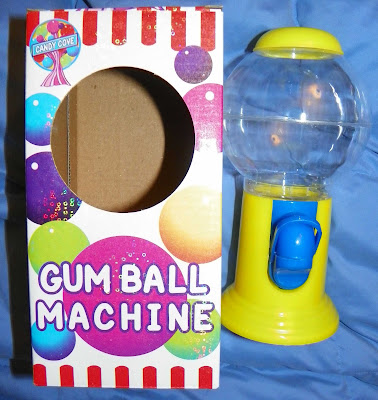

 What became of the stuff:

 The gumball machine's been hot gluegunned to a plastic container lid I had around.


Your local 99 cent store is a treasure trove! Hey! For 99 cents, if Ducky doesn't play with something - WHATEVER!
What I picked up yesterday at the 99 cent store:

Great foot toy, or attached to something.

This was pretty cool. Instead of a twist mechanism, it's a pull-down lever.
Ok - This is how frugal I am: The box is going in my aviary for a finch nesting site.

These had little holes at the ends so they can be attached to something.


The candy/toy vending machines are always best with variety.
There's seed, pellets, plastic beads, and other little toys in there.
The gumball machine's been hot gluegunned to a plastic container lid I had around.All the other stuff's been left loose.


I'm not very craft or creative, but you can imagine the potential for decorating up this swing.

Thursday, January 6, 2011
Bird Tip: Handfed does NOT = tame and handleable
Ok - I have to comment on this "handfed" issue. I've handfed birds that I've intended to become future breeders. Other than stuffing them with food, I don't play with them, I don't cuddle them, I don't do anything with them. I let them grow up interacting with other birds and all they know is that they're birds. Once weaned, these birds are completely unhandleable and not in the least bit tame despite the fact that I handfed them as babies.
Why am I bringing this to your attention? Because a majority of my breeders have been acquired from people who thought they were getting a sweet, pet quality bird because they were told it was "handfed". Not true!
When looking for a PET quality bird, keep the following in mind:
GOOD THINGS:
- The bird appears calm in general.
- The bird is calm while you're moving around checking it out.
- The bird may look at you curiously, or just seems unfazed by what's going on around it and may be exploring.
- The bird does not move away from you or otherwise appear nervous or shy when you slowly raise your hand towards it.
- The bird reaches out calmly/slowly with its beak to climb on your hand.
- You are able to easily handle the bird after a few minutes of both of you checking each other out.
- If in a cage, the bird does not go to the farthest point away from you.
- If in a cage, the bird is easily taken out of the cage (including by you).
- The bird does not appear to be afraid of towels. Some time in its life the bird will probably get toweled by you, the vet, someone in an emergency or maybe for clipping toenails/wings. Hopefully the bird's been introduced to towels in a positive manner so it's not traumatized when a towel's thrown over it for emergency or grooming.
DOUBLE PLUS GOOD (Don't disregard a bird that doesn't exhibit the following behaviors, especially if it's a very young baby):
- The bird moves towards you calmly in a friendly manner.
- The bird goes back and forth on its perch or the person selling it, body leaned forward towards you to try to get to you to meet you.
- If in a cage, the bird comes out by itself to meet you.
UNGOOD THINGS:
- The bird bites you hard in a lunging, striking manner like a snake, and either won't let go or lets go immediately and tries to get away from you. (Well, I guess if you're masochistic and like to bleed, knock yourself out, this is the bird for you.)
- The bird lunges at you.
- The bird keeps trying to get away.
- The bird seems nervous about being handled.
- The bird seems scared/nervous of hands. (I've seen a cage full of birds labeled as "handfed/handtame"; when I slowly raised my hand up towards them, they all run, some screaming, to the opposite end of the cage.)
- If in a cage, the bird needs to be chased around to get it out.
DOUBLE PLUS UNGOOD (caveat emptor):
- The bird bites the person who's selling the bird.
- The bird keeps trying to get away from the person who's selling the bird.
- The person selling the bird seems afraid or tentative about handling the bird.
- If in a cage, the bird bites when anyone tries to get it out.
- The person selling the bird puts on a glove or gets a towel in order to handle the bird. (Ok to towel to clip toenails/wings)
- The person selling the bird excuses the bird's poor behavior and tells you, "Oh, it just needs to get to know you." If this is going to be your first bird - Do you really want to lose blood, or do you want to be off to a good start with a nice bird?
- The person selling the bird excuses the bird's poor behavior and tells you, "It's a baby and just needs to be socialized." **This one's a BIG crock of bull Shitake Mushrooms. Whether you're buying a bird from a breeder or pet shop, a baby should be easily handled. THE BREEDER OR PET SHOP SHOULD HAVE ALREADY BEEN SOCIALIZING THE BABY TO PREPARE IT TO BE A GREAT PET.


Why am I bringing this to your attention? Because a majority of my breeders have been acquired from people who thought they were getting a sweet, pet quality bird because they were told it was "handfed". Not true!
When looking for a PET quality bird, keep the following in mind:
GOOD THINGS:
- The bird appears calm in general.
- The bird is calm while you're moving around checking it out.
- The bird may look at you curiously, or just seems unfazed by what's going on around it and may be exploring.
- The bird does not move away from you or otherwise appear nervous or shy when you slowly raise your hand towards it.
- The bird reaches out calmly/slowly with its beak to climb on your hand.
- You are able to easily handle the bird after a few minutes of both of you checking each other out.
- If in a cage, the bird does not go to the farthest point away from you.
- If in a cage, the bird is easily taken out of the cage (including by you).
- The bird does not appear to be afraid of towels. Some time in its life the bird will probably get toweled by you, the vet, someone in an emergency or maybe for clipping toenails/wings. Hopefully the bird's been introduced to towels in a positive manner so it's not traumatized when a towel's thrown over it for emergency or grooming.
DOUBLE PLUS GOOD (Don't disregard a bird that doesn't exhibit the following behaviors, especially if it's a very young baby):
- The bird moves towards you calmly in a friendly manner.
- The bird goes back and forth on its perch or the person selling it, body leaned forward towards you to try to get to you to meet you.
- If in a cage, the bird comes out by itself to meet you.
UNGOOD THINGS:
- The bird bites you hard in a lunging, striking manner like a snake, and either won't let go or lets go immediately and tries to get away from you. (Well, I guess if you're masochistic and like to bleed, knock yourself out, this is the bird for you.)
- The bird lunges at you.
- The bird keeps trying to get away.
- The bird seems nervous about being handled.
- The bird seems scared/nervous of hands. (I've seen a cage full of birds labeled as "handfed/handtame"; when I slowly raised my hand up towards them, they all run, some screaming, to the opposite end of the cage.)
- If in a cage, the bird needs to be chased around to get it out.
DOUBLE PLUS UNGOOD (caveat emptor):
- The bird bites the person who's selling the bird.
- The bird keeps trying to get away from the person who's selling the bird.
- The person selling the bird seems afraid or tentative about handling the bird.
- If in a cage, the bird bites when anyone tries to get it out.
- The person selling the bird puts on a glove or gets a towel in order to handle the bird. (Ok to towel to clip toenails/wings)
- The person selling the bird excuses the bird's poor behavior and tells you, "Oh, it just needs to get to know you." If this is going to be your first bird - Do you really want to lose blood, or do you want to be off to a good start with a nice bird?
- The person selling the bird excuses the bird's poor behavior and tells you, "It's a baby and just needs to be socialized." **This one's a BIG crock of bull Shitake Mushrooms. Whether you're buying a bird from a breeder or pet shop, a baby should be easily handled. THE BREEDER OR PET SHOP SHOULD HAVE ALREADY BEEN SOCIALIZING THE BABY TO PREPARE IT TO BE A GREAT PET.

Sun Conures, Jenday Conures, most cockatoos should be easily handled like this.
The bird may not let you immediately handle it like this, but the person selling the bird should be able to.

At the very minimum the bird should sit calmly on your hand.
The bird should calmly go from hand to hand and not be nervous or biting.
Note - reaching down and chewing/nibbling your fingers is NOT biting.
I'll post later about what is and isn't a bite.
Monday, December 20, 2010
Bird Tip-The Cage is His Room, not Jail
Does your bird scream or otherwise fuss when you put him back in his cage?
When putting your bird back in his cage put something special in there first - favorite food, toy, etc. Let him see the special item, then put him in the cage. From my experience this teaches them that the cage is a wonderful place and they'll start to go into their cage by themselves.
Leave the cage door open when you have the bird out. When he's tired, thirsty, hungry, whatever, he can go back into the cage himself. He learns the cage is not a prison, it's his room. A couple of days ago my daughter told me Ducky (her sun conure) got tired of playing with her and walked back to his cage for a bath. Then he took a nap in his cage.

When putting your bird back in his cage put something special in there first - favorite food, toy, etc. Let him see the special item, then put him in the cage. From my experience this teaches them that the cage is a wonderful place and they'll start to go into their cage by themselves.
Leave the cage door open when you have the bird out. When he's tired, thirsty, hungry, whatever, he can go back into the cage himself. He learns the cage is not a prison, it's his room. A couple of days ago my daughter told me Ducky (her sun conure) got tired of playing with her and walked back to his cage for a bath. Then he took a nap in his cage.


Skittles
(Jenday Conure)
Partied too hard the night before and crashed in the food bowl.
Subscribe to:
Comments (Atom)