Showing posts with label ducky. Show all posts
Showing posts with label ducky. Show all posts
Saturday, September 17, 2011


Thursday, July 14, 2011
Staring at Birds - "New" Playstand
My husband, the bestest husband EVER made this for me:


No, I do not own a normal vacuum.


Tuesday, May 10, 2011
Bird Thought - Don't take your "common" bird for granted.
I always thought sun conures were one of the rats of the avian world. I mean, they're so common . . . aren't they?
I just learned yesterday that the sun conure is common in US aviculture, but upgraded to endangered status in 2008 in the wild.
Endangered Species List - Sun Conures: http://www.iucnredlist.org/apps/redlist/details/142601/0
Estimated Wild Population
And the cape parrot is uncommon in US aviculture, but not considered endangered in the wild.
Endangered Species List - Cape Parrot: http://www.iucnredlist.org/apps/redlist/details/142531/0
Estimated Wild Population
Makes me curious to search other species that we think of as "common" and how common they truly are in the wild.
Just soze y'all know - wild caught parrots have not been legally imported into the United States since 1992. So, don't feel bad about getting a sun conure! Cherish your little baby for the special creature it is. US captive breeding does not negatively impact the wild population. I feel privileged to be breeding the endangered sun conure.
Learn something new every day.
I just learned yesterday that the sun conure is common in US aviculture, but upgraded to endangered status in 2008 in the wild.
Endangered Species List - Sun Conures: http://www.iucnredlist.org/apps/redlist/details/142601/0
Estimated Wild Population
And the cape parrot is uncommon in US aviculture, but not considered endangered in the wild.
Endangered Species List - Cape Parrot: http://www.iucnredlist.org/apps/redlist/details/142531/0
Estimated Wild Population
Makes me curious to search other species that we think of as "common" and how common they truly are in the wild.
Just soze y'all know - wild caught parrots have not been legally imported into the United States since 1992. So, don't feel bad about getting a sun conure! Cherish your little baby for the special creature it is. US captive breeding does not negatively impact the wild population. I feel privileged to be breeding the endangered sun conure.
Learn something new every day.
Monday, March 14, 2011
Bird Tip - The "S" Word!
SOCIALIZE, SOCIALIZE, SOCIALIZE!

Hopefully, you have gotten your bird from a source that's already socialized your new bird very well. Regardless, you must socialize the bird or continue to give the bird new experiences. A little fear is not a bad thing. Don't be over protective; but keep in mind - don't terrify the bird.
I know you think you're doing what's best for your bird by removing him from the scary experience - "Oh, it scares Polly! Poor Polly! I don't want Polly to be scared!"
In the bird's mind it's, "Oh! That's scary! Oh! My owner says we need to hurry away from the scary thing; therefore, this scary thing must be dangerous!"
Lesson learned is next time the scary thing is encountered, the bird will react with more fear because you've taught it that the thing was dangerous.
On the other hand, if we do not remove them from the scary thing:
Human - "Oh, it scares Polly! Well, it's just a stuffed animal that's not harmful to Polly. No reason to remove Polly away from the toy." Human to bird - "It's ok Polly, it's just a toy." And we help the bird understand it's not a dangerous thing, and we expose the bird until it relaxes.
Bird - "Oh! That's scary! Hmm. . . But my owner doesn't seem scared. Hmm . . . my owner's being very calm about all of this. Hmm . . . my owner not afraid of this thing. Hmm. . . I think I'll touch it with my beak and see for myself. Oh! Hey! It's kinda squishy. I guess it's nothing to be afraid of!"
Lesson learned is next time I see this thing it's not scary and might be in need of further exploration.
I'm a strong believer that the animal takes cues from us as to how it should react to its environment and new things. I notice in both my horses and my birds, the more I help them overcome a scary experience, the more trusting the animal is of me. When I first got my grey arab, he really had a hard time listening to me - he was a very reactionary horse. I discovered that when I helped him overcome something scary, his behavior immediately changed afterwards and he was much more compliant when being ridden.
For birds, the amount of fear I like to see is when the bird stands really tall slightly leaning away from the object, looks concerned, may be moving its head around to see where it can flee to, wings may be flicking like it wants to get away; but there is no actual movement to get away from the object. Any actual movement away from the scary object is too scary.
It's about nuance and a "feel" for the animal. SOCIALIZE, BUT DON'T TERRIFY YOUR BIRD.


Ducky and the latest batch of babies performing community service.
My daughter and I volunteer with a local cat shelter, Friends of Cats - FOC.
We take Ducky and any babies to events to socialize.
This picture was taken at a Farmer's Market.
Hopefully, you have gotten your bird from a source that's already socialized your new bird very well. Regardless, you must socialize the bird or continue to give the bird new experiences. A little fear is not a bad thing. Don't be over protective; but keep in mind - don't terrify the bird.
I know you think you're doing what's best for your bird by removing him from the scary experience - "Oh, it scares Polly! Poor Polly! I don't want Polly to be scared!"
In the bird's mind it's, "Oh! That's scary! Oh! My owner says we need to hurry away from the scary thing; therefore, this scary thing must be dangerous!"
Lesson learned is next time the scary thing is encountered, the bird will react with more fear because you've taught it that the thing was dangerous.
On the other hand, if we do not remove them from the scary thing:
Human - "Oh, it scares Polly! Well, it's just a stuffed animal that's not harmful to Polly. No reason to remove Polly away from the toy." Human to bird - "It's ok Polly, it's just a toy." And we help the bird understand it's not a dangerous thing, and we expose the bird until it relaxes.
Bird - "Oh! That's scary! Hmm. . . But my owner doesn't seem scared. Hmm . . . my owner's being very calm about all of this. Hmm . . . my owner not afraid of this thing. Hmm. . . I think I'll touch it with my beak and see for myself. Oh! Hey! It's kinda squishy. I guess it's nothing to be afraid of!"
Lesson learned is next time I see this thing it's not scary and might be in need of further exploration.
I'm a strong believer that the animal takes cues from us as to how it should react to its environment and new things. I notice in both my horses and my birds, the more I help them overcome a scary experience, the more trusting the animal is of me. When I first got my grey arab, he really had a hard time listening to me - he was a very reactionary horse. I discovered that when I helped him overcome something scary, his behavior immediately changed afterwards and he was much more compliant when being ridden.
For birds, the amount of fear I like to see is when the bird stands really tall slightly leaning away from the object, looks concerned, may be moving its head around to see where it can flee to, wings may be flicking like it wants to get away; but there is no actual movement to get away from the object. Any actual movement away from the scary object is too scary.
It's about nuance and a "feel" for the animal. SOCIALIZE, BUT DON'T TERRIFY YOUR BIRD.

Friday, February 11, 2011
Bird Tip - **WARNING! X-RATED**
Don't sexually stimulate or encourage your bird to behave sexually!!!
It can cause screaming, biting, territoriality, aggression, and in the females egg binding - PROBLEMS!
Female Sexual Behaviors:
They're not like mammals - we can't stop our bodies having a menses. Their bodies don't have to produce eggs if the conditions aren't right. Egg production can kill your bird! Google "egg binding" to learn about it.
Male Sexual Behaviors:
I've never had any territoriality or aggression with the towel set up. I discovered this method by accident. My first jenday would put herself to bed behind the curtain that was near her cage, so I hung a towel in a corner for her in her cage. She'd wrap herself up in it like a burrito.
Just make sure the towel doesn't have loose weaving so no bathroom type towels. Cloth napkins with the tight weave work.

It can cause screaming, biting, territoriality, aggression, and in the females egg binding - PROBLEMS!
Female Sexual Behaviors:
- Don't pet her in sexy ways - one long stroke from the top of her head to the end of her tail. It feels like you're trying to mate with her. She may start crouching for you to make it easier for you to "do it".
- Don't let her get territorial or obsessed over dark little cubbie type areas like kleenex boxes, happy huts. Just don't give them any nesty type things in their cages.
- Don't let her back up onto you, trying to rub her vent on you.
They're not like mammals - we can't stop our bodies having a menses. Their bodies don't have to produce eggs if the conditions aren't right. Egg production can kill your bird! Google "egg binding" to learn about it.
Male Sexual Behaviors:
- Rubbing his vent area on you in a back and forth motion. I've heard they can complete the act and leave you a little puddle. EWWWWW!! You wouldn't let your dog hump your leg would you?
- Regurgitating for you or trying to feed you. You might think it's sweet or cute. Think VOMIT!
- Possessiveness of one person. It's not cute that your bird sits on your shoulder lunging at other people. It's territoriality and "claiming" you. If the bird can't bite the other person, he/she might take a bite out of your face. Stop the behavior immediately! Take the bird off your shoulder and firmly, not loudly, tell your bird "no"!
- Stop any sexy petting (head and neck scritches only)
- Immediately stop any sexy behavior from the bird
- Redirect any sexy behavior from the bird (he/she tries to crouch, rub, regurgitate you need to change whatever it is you two are doing that causes these behaviors)
- Move the cage to another location in the house
- Move the toys and stuff in the cage around
- Decrease the number of lighting hours
- Remove any boxes, happy huts, or other dark cozy areas
I've never had any territoriality or aggression with the towel set up. I discovered this method by accident. My first jenday would put herself to bed behind the curtain that was near her cage, so I hung a towel in a corner for her in her cage. She'd wrap herself up in it like a burrito.
Just make sure the towel doesn't have loose weaving so no bathroom type towels. Cloth napkins with the tight weave work.

An old shirt works, too.
Ducky was already asleep behind it,
but came out to yell at me for disturbing his beauty sleep.
Sunday, January 30, 2011
Ducky!

Cutie Pie the Clown is the BOMB!!
Not just for kids!
She can make you look like a Na'vi out of Avatar!
Hire her for all your facepainting/body art needs!
Sunday, January 16, 2011
Bird Tip - Frugal Fun
I'm frugal, not cheap. . . Um, no. I'm cheap. I rarely buy expensive bird toys anymore. Recently I bought Ducky a $15 wood and rope bird toy I thought fer sure he would LOVE. He doesn't love it or hate it. He pretty much ignores it. I don't know about you, but $15 down the drain annoys the snot outa me.
Your local 99 cent store is a treasure trove! Hey! For 99 cents, if Ducky doesn't play with something - WHATEVER!
What I picked up yesterday at the 99 cent store:

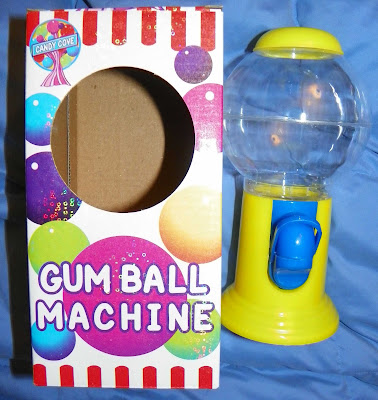

 What became of the stuff:

 The gumball machine's been hot gluegunned to a plastic container lid I had around.


Your local 99 cent store is a treasure trove! Hey! For 99 cents, if Ducky doesn't play with something - WHATEVER!
What I picked up yesterday at the 99 cent store:

Great foot toy, or attached to something.

This was pretty cool. Instead of a twist mechanism, it's a pull-down lever.
Ok - This is how frugal I am: The box is going in my aviary for a finch nesting site.

These had little holes at the ends so they can be attached to something.


The candy/toy vending machines are always best with variety.
There's seed, pellets, plastic beads, and other little toys in there.
The gumball machine's been hot gluegunned to a plastic container lid I had around.All the other stuff's been left loose.


I'm not very craft or creative, but you can imagine the potential for decorating up this swing.

Monday, December 20, 2010
Bird Tip-The Cage is His Room, not Jail
Does your bird scream or otherwise fuss when you put him back in his cage?
When putting your bird back in his cage put something special in there first - favorite food, toy, etc. Let him see the special item, then put him in the cage. From my experience this teaches them that the cage is a wonderful place and they'll start to go into their cage by themselves.
Leave the cage door open when you have the bird out. When he's tired, thirsty, hungry, whatever, he can go back into the cage himself. He learns the cage is not a prison, it's his room. A couple of days ago my daughter told me Ducky (her sun conure) got tired of playing with her and walked back to his cage for a bath. Then he took a nap in his cage.

When putting your bird back in his cage put something special in there first - favorite food, toy, etc. Let him see the special item, then put him in the cage. From my experience this teaches them that the cage is a wonderful place and they'll start to go into their cage by themselves.
Leave the cage door open when you have the bird out. When he's tired, thirsty, hungry, whatever, he can go back into the cage himself. He learns the cage is not a prison, it's his room. A couple of days ago my daughter told me Ducky (her sun conure) got tired of playing with her and walked back to his cage for a bath. Then he took a nap in his cage.


Skittles
(Jenday Conure)
Partied too hard the night before and crashed in the food bowl.
Subscribe to:
Posts (Atom)